WebXR simulation2026
Apiary XR
Open a beehive, lift a frame out, and read the comb the colony has drawn on it.
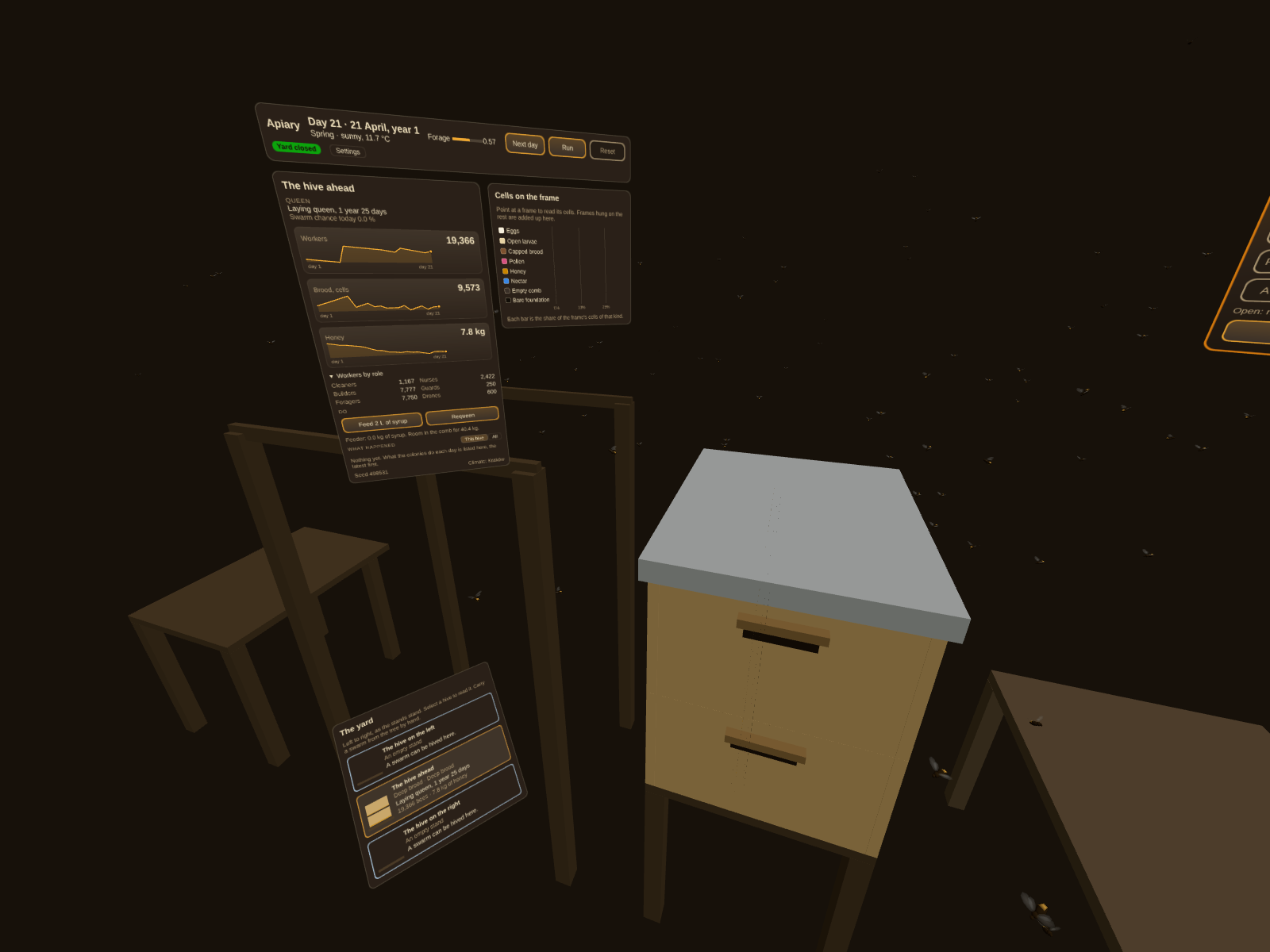
A Langstroth hive stands on its stand in front of you at full size, two brood boxes deep, with foragers streaming in and out of the entrance at the foot of its front and guards circling the boxes. Take the lid off and set it on the table, lift the top box onto it, and pull a frame out of the brood box by its top bar: the comb on it is the colony's as the simulation has it today, eggs and larvae and capped brood in the middle, pollen and honey around them, cell by cell. Put everything back and let the days pass.
What makes it interesting
- The hive is a simulation of the colony, kept true to the yard after every move: a frame hung on the rest is a frame the colony no longer has, and a frame put back two slots along is where the queen finds it.
- The disassembly follows a beekeeper's rules. The lid comes off first and goes upturned onto the table, a box comes off only from the top and stands on the lid, a frame comes out only of an uncovered box, and a day passes only once the hive is closed again.
- Every cell the model tracks is drawn, one hexagonal prism per cell across twenty frames, in colours checked so no two kinds can be mistaken for each other; point at a frame and the panel charts its cells, beside a year of the colony's workers, brood and honey.
- The bees are scenery that answers to you: take the lid off and they boil up out of the open box, lift a frame and they follow it, while the nurses on the comb walk about on both faces and a third of them take to the air.
A year can be played: the panel says what each colony needs, room, food or a queen, and has the buttons that answer it, from fetching and harvesting a super to feeding and requeening, and a swarm can be carried from its tree onto an empty stand. A hived swarm does not live long yet. The ?emulator link opens it in an ordinary tab.
More pictures
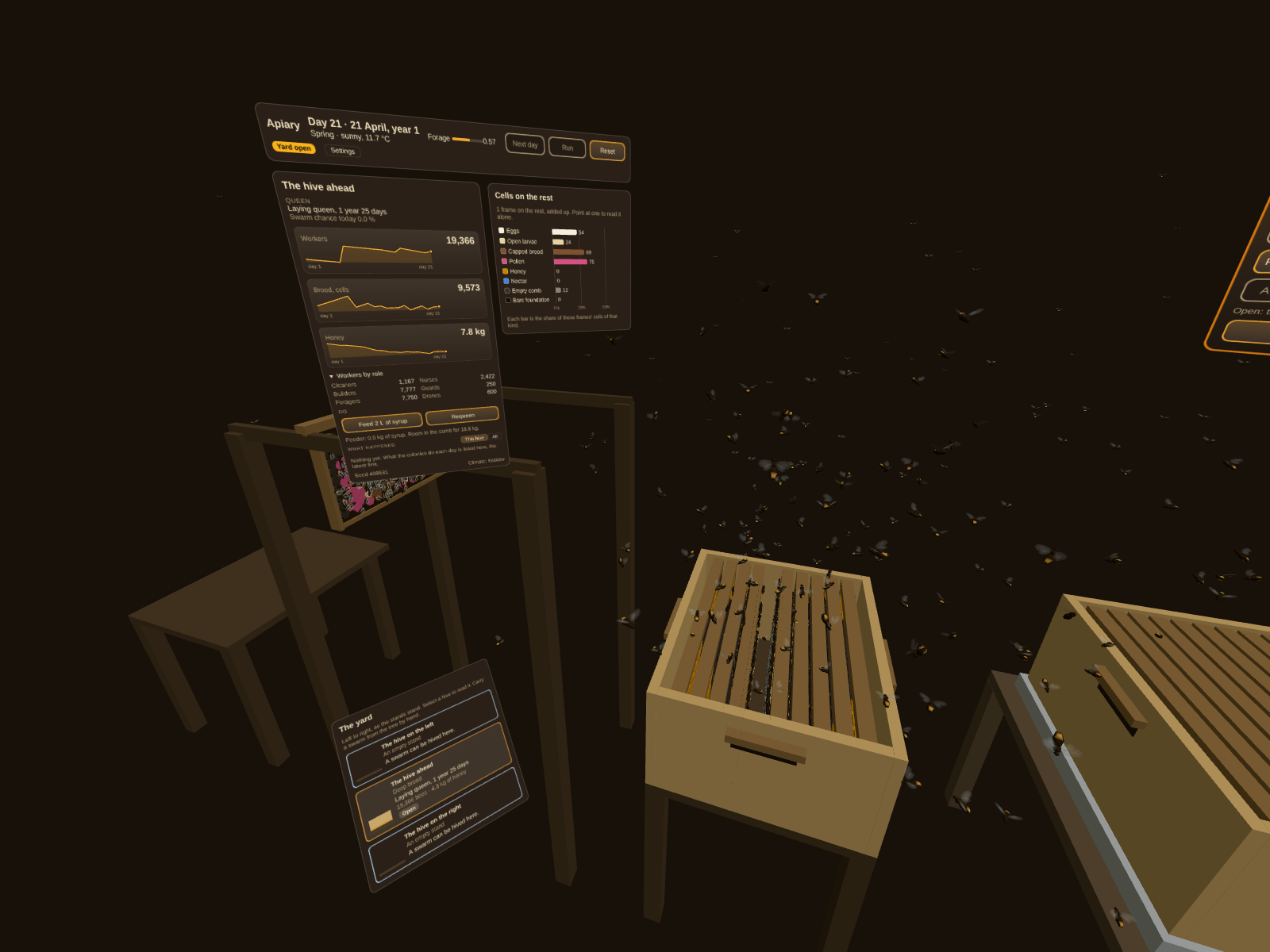
Opened: a brood frame on the rest, its cells charted as bars in the comb's own colours.